
Excellent teaching methods, well-equipped labs, and well-qualified teachers—these are some of the best answers to Why study in New Zealand? New Zealand, a picturesque country providing a safe environment for international students along with some of the world’s most recognised universities, makes it a perfect choice to pursue higher studies in New Zealand from Nepal.
Explore here all the information you need about studying in New Zealand, right from its cost to the five best reasons to study in New Zealand.
Benefits of Studying in New Zealand for Nepalese Students
Pursuing education in New Zealand is a great option for Nepalese students due to the various advantages that come along with it. Mentioned below are some of the ways in which they can benefit from doing so:
- High-quality education with globally recognised qualifications.
- Welcoming and safe environment with a friendly and inclusive culture.
- Breathtaking natural landscapes and opportunities for outdoor adventures
- Multicultural society that fosters tolerance and understanding.
- Favourable post-study work opportunities and pathways for skilled migration.
Popular Courses to Study in New Zealand for Nepalese Students
When it comes to studying abroad, New Zealand is a great destination for international students. They have access to many different courses of study, and the tuition fees can be quite reasonable. Here are some examples, though fees are subject to change depending on the university and programme:
| Courses/Programs | Average Tuition Fees (per year) |
| Business and Management | NZD 20,000 – 35,000 per year |
| Engineering | NZD 25,000 – 40,000 per year |
| Information Technology | NZD 20,000 – 35,000 per year |
| Hospitality and Tourism | NZD 18,000 – 25,000 per year |
| Health Sciences (e.g., Nursing, Medicine) | NZD 25,000 – 40,000 per year |
| Arts and Humanities | NZD 18,000 – 30,000 per year |
| Science and Technology | NZD 20,000 – 35,000 per year |
| Social Sciences (e.g., Psychology, Sociology) | NZD 18,000 – 30,000 per year |
Top Universities to Study in New Zealand for Nepalese Students
New Zealand is home to most recognized universities that offer high-quality education and research opportunities. While rankings may vary depending on the criteria used, here are some of the top universities in New Zealand based on global rankings and reputation:
| University | Fees | Courses offered |
| Auckland University of Technology (AUT) | NZD 25,000 – 35,000 per year | Business and Management, Computer Science and Information Technology, Design and Creative Technologies, Health Sciences (Nursing, Public Health) |
| Lincoln University, New Zealand | NZD 25,000 – 35,000 per year | Agriculture and Agribusiness, Environmental Science, Landscape Architecture, Food Science and Technology |
| Massey University – Kaplan International | NZD 20,000 – 30,000 per year | Business Administration, Veterinary Science, Communication and Media Studies, Engineering (Mechanical, Electrical, Civil) |
| The University of Auckland | NZD 75,000 – 85,000 per year | Medicine, Engineering (Chemical, Civil, Electrical, Mechanical), Law, Psychology |
| The University of Otago | NZD 70,000 – 80,000 per year | Health Sciences (Medicine, Dentistry, Pharmacy), Business Studies, Biomedical Sciences, Physical Education and Sports Science |
| The University of Waikato | NZD 25,000 – 30,000 per year | Computer Science, Law and Social Sciences, Education, Engineering (Software, Mechanical, Electronic) |
The Educational System
This is the number one reason to go New Zealand to study. New Zealand is amazing for their education system. At first, tuition fee is some of the lowest in the world. The degrees are recognized around the world as being up-to-date and practical. You will get high quality hand on education that you deserve. The New Zealand even goes so far as to checking each and every course, program and certificate for quality so that they can be recognized around the world as high-quality education. The support services for international students are among the best in the world. They have a lot of expertise and experience in helping international students so that they can succeed in their programs.
Academic Year
The New Zealand academic year goes from February to November with a long summer break from late November to early February. Most universities operate on a two- semester system.
University programs
- Bachelor’s Degrees
- Graduate and Post-Graduate Diplomas
- Master’s Degrees
- Foundation Studies
Polytechnic and Technical Institutes
- Certificate, diploma, degree and post-graduate courses
- Vocationally based programs
- Specific training – e.g. trades, nursing, and journalism
Vocational Education Institutes
Specific training in areas-Aviation, Hospitality, Travel & Tourism, Graphic Design, Diving, Animation / Film, Sky Diving, Surfing
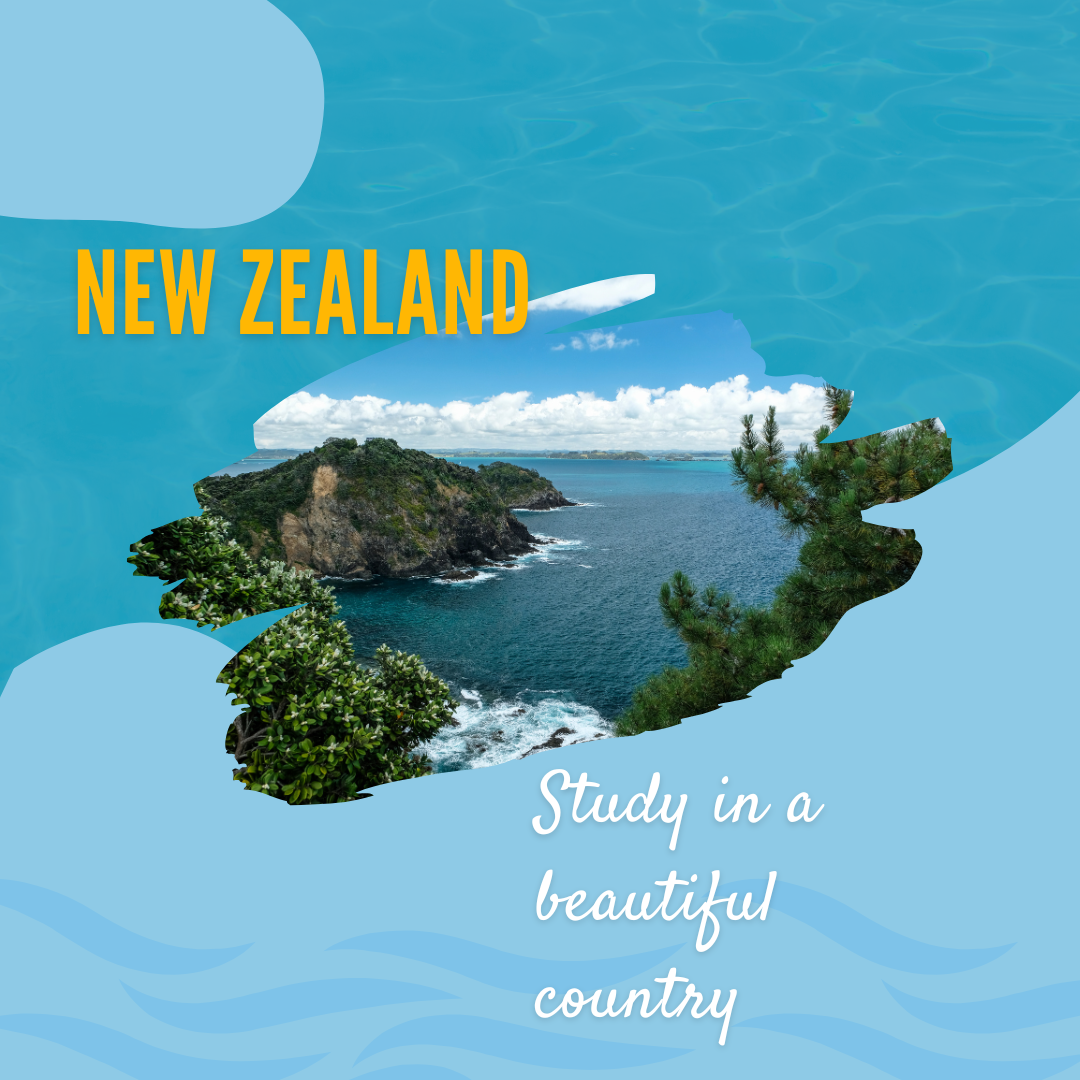
This is an amazing opportunity for anyone who looks for adventure. In New Zealand, there are literally thousands of things to do. There are plenty of mountains for you to explore. You can enjoy the beaches throughout the year and there are always new thing to do. The scenery is different depending on where you go; you could drive an hour and have completely different geography.
English Language Requirement
You will be required to take IELTS before you are admitted to a NZ university. The Next academics believe that students who have grown up in an English medium environment may not really need any training for the test. Hence, The Next has developed a system by which students can assess their ability and be familiar with the format of the test prior to taking it. If English is not your first language, you will need to provide evidence of your English language ability. IELTS 6.0 with no band less than 5.5 for undergraduate and 6.5 with no band less than 6.0 for postgraduate level of study. A TOEFL paper test score of 550, internet based 80 for undergraduate and paper test score 575, internet based 90 for postgraduate level of study.
| Key Facts to Study in New Zealand | |
| Language Spoken | English (official language) |
| Cost of Study | Undergraduate: NZD 20,000 – NZD 40,000 per year Postgraduate: NZD 25,000 – NZD 50,000 per year |
| Source of Funding | Scholarships, Personal savings, Education Loans, Sponsorship from government or private entities |
| Exams Required | IELTS, TOFEL |
| Degrees | Bachelor’s Degree, Master’s Degree, Doctoral Degree |
| Intake | Semester 1: February/March, Semester 2: July, Summer Intake: November/December |
| Visa Requirements | Valid Passport with a minimum validity of 3 months beyond the intended stay |
Cost of studying in New Zealand for Nepalese Students
When it comes to education in New Zealand, there are several costs that students need to be aware of before making their decision. These expenses can vary based on the university, programme of study, location, and personal lifestyle choices. Here is a look at the primary financial components to bear in mind:
| S.No | Education Cost | Tuition fees |
| 1 | Undergraduate courses | $20,000 – $30,000 annually |
| 2 | Master’s courses | $20,000 – $35,000 annually |
| 3 | Master of Business Administration | $31,500 – $55,000 annually |
Interesting Facts about New Zealand
New Zealand is known for having more sheep than people, its clear waters considered some of the purest in the world, being home to the flightless kiwi bird (which is also what New Zealanders are called), and for being the filming location of “Lord of the Rings”, with the famous “Hobbiton” set.
Other interesting facts about New Zealand:
- “Kiwi” nickname: New Zealanders are called “Kiwis” after their national bird, the flightless kiwi.
- Steepest street: Baldwin Street in Dunedin is recognized as the steepest residential street in the world.
- Mānuka honey: This unique honey variety is only produced in New Zealand from the Mānuka tree.
- No snakes: Due to its isolation, New Zealand has no native snake species.
- Women’s suffrage: New Zealand was the first country to grant women the right to vote.
- “Lord of the Rings” connection: Much of the “Lord of the Rings” movie trilogy was filmed in New Zealand’s stunning landscapes.
- High sheep population: New Zealand has significantly more sheep than people.
- Clear waters: The Blue Lake in Nelson Lakes National Park is often considered to have the clearest natural water in the world.
- Maori language: Alongside English, Maori is an official language in New Zealand.
- Island nation: New Zealand consists of two main islands, the North Island and the South Island.
Work opportunities
There are plenty of work opportunities available for international students. On a student visa, you are allowed to work up to 20 hours a week through the semester and during vacations you can work up to 40 hours. The international studies office at your university can help you find a job to sustain you during your time in New Zealand. Another great thing is that you can get a permit at the end of your degree program and work for 12 months in the country under a special “work permit” that is alongside your student visa.
What is the cost of studying in New Zealand for a Nepalese student?
The cost of studying in New Zealand will vary depending on a number of factors, including the type of institution and the program of study. In general, however, international students in New Zealand can expect to pay between NZD 20,000 and NZD 30,000 per year for tuition, plus additional costs for living expenses, travel, and insurance.
Are there scholarships available for Nepalese students to study in New Zealand?
Yes, there are scholarships available for Nepalese students to study in New Zealand. Some scholarships are offered by the New Zealand government, while others are offered by educational institutions or private organizations.
Does a New Zealand visa require an interview?
Once the visa fee has been paid, the applicant will be able to schedule a visa interview with the New Zealand Embassy or Consulate. The visa interview is the final stage of the application procedure, in which one of the consular officers will ask questions in order to assess the applications.
How long can I stay in New Zealand after studying?
If you study a postgraduate degree after completing your undergraduate degree, you may be eligible for a Post Study Work Visa that is valid for up to three years.
Can I get PR after studying in New Zealand?
If you have a degree that is acceptable, you can apply for a visa to work in New Zealand for up to three years after you complete your studies. Depending on the degree of your education and the location of your studies, a post-study work visa is valid for 1, 2, or 3 years.
What is the minimum wage in New Zealand for international students?
The minimum wage in New Zealand is NZ$18.90 per hour for international students.
Does New Zealand accept the gap?
Even after a ten-year gap, a student can apply for a New Zealand visa if he or she can provide credible information about work experience, studies, and skill set.